

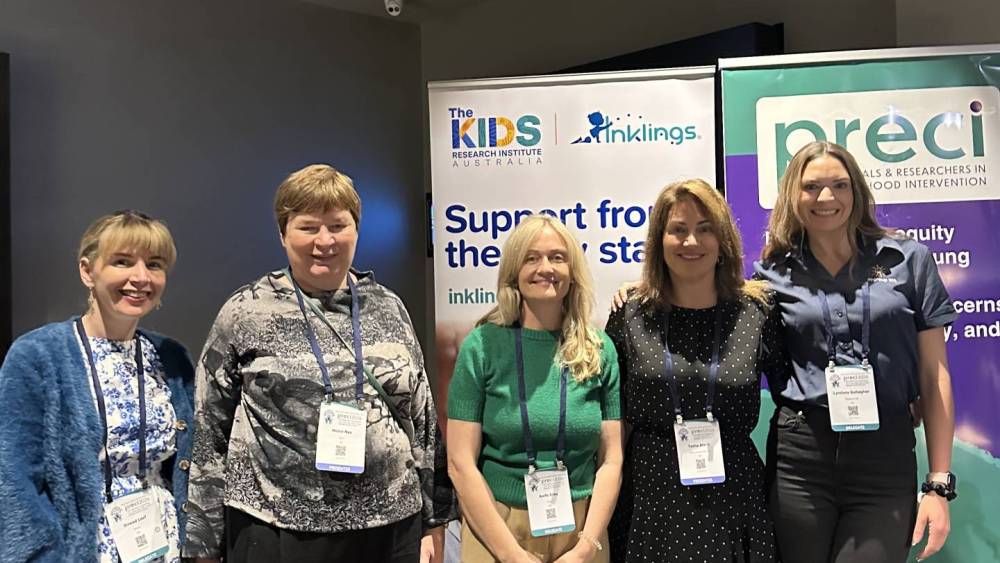
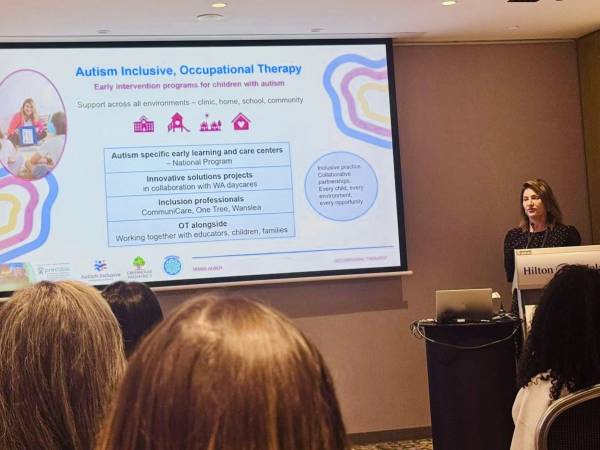
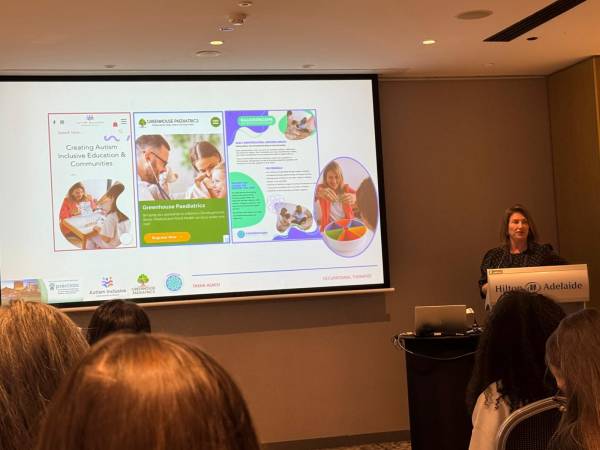
Tasha Alach, Lead Clinician at Greenhouse Paediatrics, Kaleidoscope Program and Director of Autism Inclusive, recently presented at the 2026 PRECI Conference in Adelaide. Here, she shares her key insights from the event.
A national conversation on early childhood intervention
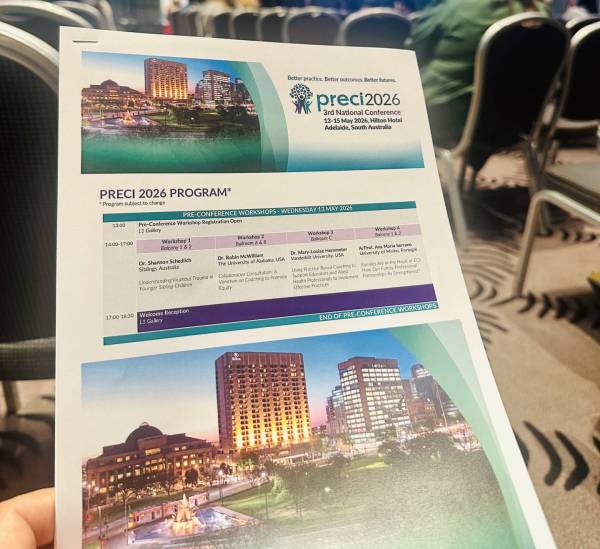
In May, I had the opportunity to attend the 3rd National PRECI (Professionals and Researchers in Early Childhood Intervention) Conference. The event brought together more than 400 professionals, researchers, educators, allied health practitioners, paediatricians and policymakers from across Australia, all working toward better outcomes for children with developmental delay, disability and neurodivergence and their families.
What stood out most was how closely the latest research aligns with the work we’re already doing through Greenhouse Paediatrics and the Kaleidoscope Program.
Why early support matters
A strong focus throughout the conference was the importance of identifying developmental concerns early and ensuring families can access support before reaching crisis point. Many speakers highlighted the long and often stressful wait for assessments, diagnoses and services, and the need for better support and guidance during this time.
This reflects the thinking behind the Kaleidoscope Program, which aims to give vulnerable families earlier access to paediatric, allied health and family support, while helping them navigate what can often feel like a complex system.
Supporting children in everyday settings
There was clear agreement that children achieve the best outcomes when support is embedded in their everyday environments. At home, in childcare, at school and in the community, rather than relying solely on clinic-based therapy.
This approach is central to both Greenhouse Paediatrics and Kaleidoscope. We work alongside families, educators and community organisations to build confidence, strengthen skills and create supports that are practical and sustainable in day-to-day life.
Focusing on participation, not just skills
Another key message was the shift away from isolated skill development towards meaningful participation. Increasingly, success is being measured by how well a child can engage in family life, learning, play, friendships and community activities.
This closely reflects our approach at Greenhouse Paediatrics. Our goal isn’t simply to build skills, but to support children to take part in the moments and environments that matter most to them and their families.
Working together for better outcomes
Collaboration was another consistent theme. The evidence continues to show that when families, educators, therapists, paediatricians and community services work together around shared goals, children receive more consistent support and achieve stronger outcomes.
At Greenhouse Paediatrics, this is something we prioritise every day. Our integrated model brings together paediatricians and allied health professionals, while the Kaleidoscope Program extends this collaboration into schools, childcare settings and the wider community.
Looking ahead
The conference left me feeling optimistic about the future of early childhood intervention in Australia. There is a clear shift toward approaches that are family-centred, neuro-affirming, collaborative and focused on inclusion.
Most importantly, the research continues to reinforce something we have always believed: Children thrive when the people around them work together to create environments where they can belong, participate and grow.