

What if the biggest barrier to a child completing a task isn’t skill, motivation or defiance, but their nervous system’s capacity in that exact moment?
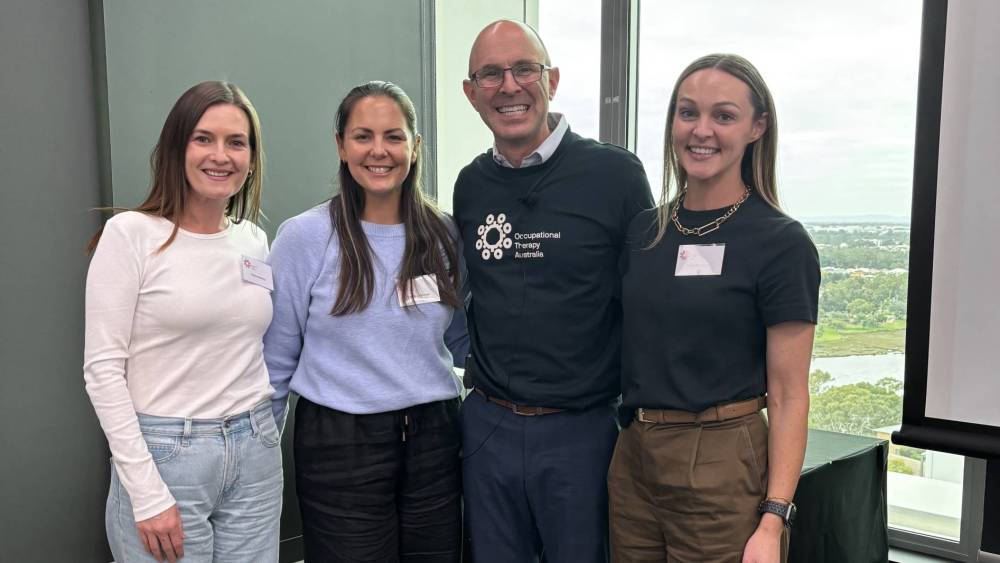
That’s one of the ideas explored at Greg Santucci’s Regulate to Participate: Neuro-Affirming Strategies for Everyday Practice workshop, which three of our occupational therapists, Hayley, Nat and Elyse, recently attended. The day was packed with practical strategies that reinforced the importance of understanding behaviour through the lens of nervous system regulation rather than compliance.
Hayley shares her insights and takeaways from the event.
Understanding fluctuating capacity
Among the many ideas covered on the day, one concept that particularly resonated was fluctuating capacity. As parents, it’s easy to assume that if a child could complete a task yesterday, they should be able to do it again today. However, Greg reminded us that the skill hasn’t changed, the child’s capacity has.
Capacity naturally fluctuates throughout the day and from one day to the next, influenced by factors such as sleep, sensory load, emotional safety, physiological needs, cognitive demands, transitions and the cumulative effort of “getting through” the day.
The lasagne analogy
A wonderful analogy shared during the workshop compared this to making lasagne. Imagine you’ve bought all the ingredients and fully intend to make it for dinner. After an exhausting day at work, you’ve dealt with unexpected challenges, skipped lunch and arrive home completely depleted. You don’t suddenly forget how to make lasagne, you simply don’t have the capacity to do it at that moment, so you order pizza instead. Tomorrow, with more energy, making lasagne may feel achievable again.
Children experience these same fluctuations in capacity every day. They haven’t lost the skill, they temporarily have less access to it.
Shifting the question
This perspective encourages us to shift from asking, “Why won’t they do it?” to “What is reducing their capacity right now?” When we recognise fluctuating capacity, we can respond with curiosity, compassion and meaningful supports rather than assuming a child is being defiant or unmotivated.
Key takeaway
This workshop provided many valuable reminders that neuro-affirming practice is about meeting children where they are, recognising that participation depends not only on skills but also on the capacity to access those skills in the moment.
If you would like support to better understand what’s driving your child’s behaviour and how to build capacity-friendly routines at home or school, our OT team is here to help. Get in touch with us to find out how occupational therapy can support your child’s participation and regulation.